Is Blockchain Without Proof Of Work Secure? / What Is Proof Of Activity And Why It Matters To Understand Blockchain Business Models Fourweekmba : Is blockchain without proof of work secure?. As coronavirus vaccines become more widespread, critical questions arise around providing proof of vaccination. How can a blockchain work without mining?. Misbehaving as a miner or node will result in being cut off from the network either technically or economically. While hashcash was designed in 1997 by adam back , the original idea was first proposed by cynthia dwork and moni naor and eli ponyatovski in their 1992 paper. What exactly is solana (sol)?
While both pos and pow are devised to tackle the blockchain hacks and frauds, they deviate from one another. To address the issue of trust, blockchain networks have implemented tests for computers that want to. To change a block, miners need to create a new block with the same predecessor. To address the issue of trust, blockchain networks have implemented tests for computers that want to join and add blocks to the chain. Blockchains use consensus mechanisms in order to secure the network.
The Secret Behind The Blockchain Technology from image.slidesharecdn.com Proof of work (pow) is a piece of data that is hard and costly to produce, but easy to verify once it's been generated. It's important to understand which consensus mechanism to choose for a specific use case. Proof of work is generally more resource intensive than proof of stake and proof of burn, but it is much more secure for small networks, and incentivizes participation in a token economy rather than incentivizing control of a network. First, special nodes on the komodo network, called notary nodes, select a block from the small chain to be protected. From greater user privacy and heightened security to lower processing fees and. Originally developed in 1993, the proof of work consensus mechanism was first popularized when it was used to launch bitcoin. The major difference between proof of work and proof of stake is that users of the latter do not have to solve complex problems to achieve consensus. They're separate concepts, and blockchains can work alone.
The proof of work provides high levels of security, safety, and irreversibility that is required in the anonymous public environment.
Building the blockchain sybil proof accounts are an important building brick of a secure, decentralized blockchain, but they aren't sufficient. Besides, each block's hash contains the hash of the previous one; What exactly is solana (sol)? To address the issue of trust, blockchain networks have implemented tests for computers that want to. Bitcoin uses proof of work which has been very successful, however there are newer consensus mechanisms being developed all the time. To address the issue of trust, blockchain networks have implemented tests for computers that want to join and add blocks to the chain. Here's an overview of its differences: The major difference between proof of work and proof of stake is that users of the latter do not have to solve complex problems to achieve consensus. The winner gets to refresh the blockchain for the most recent validated transactions and is credited with a predetermined amount of cryptocurrency by the network. Proof of work is not the only way to secure a blockchain. While hashcash was designed in 1997 by adam back , the original idea was first proposed by cynthia dwork and moni naor and eli ponyatovski in their 1992 paper. Proof of stake (pos) is a modification of pow introduced in 2012 as a means to solve its perceived dependency on energy consumption as a means to determine blockchain ordering. To prolong the blockchain, bitcoin uses hashcash puzzles.
Building the blockchain sybil proof accounts are an important building brick of a secure, decentralized blockchain, but they aren't sufficient. Bitcoin and other cryptocurrencies are now protecting their blockchain, requiring new entries to include proof of work. Bitcoin uses proof of work which has been very successful, however there are newer consensus mechanisms being developed all the time. The small chain assures the block is a valid one ready for notarizing. From greater user privacy and heightened security to lower processing fees and.
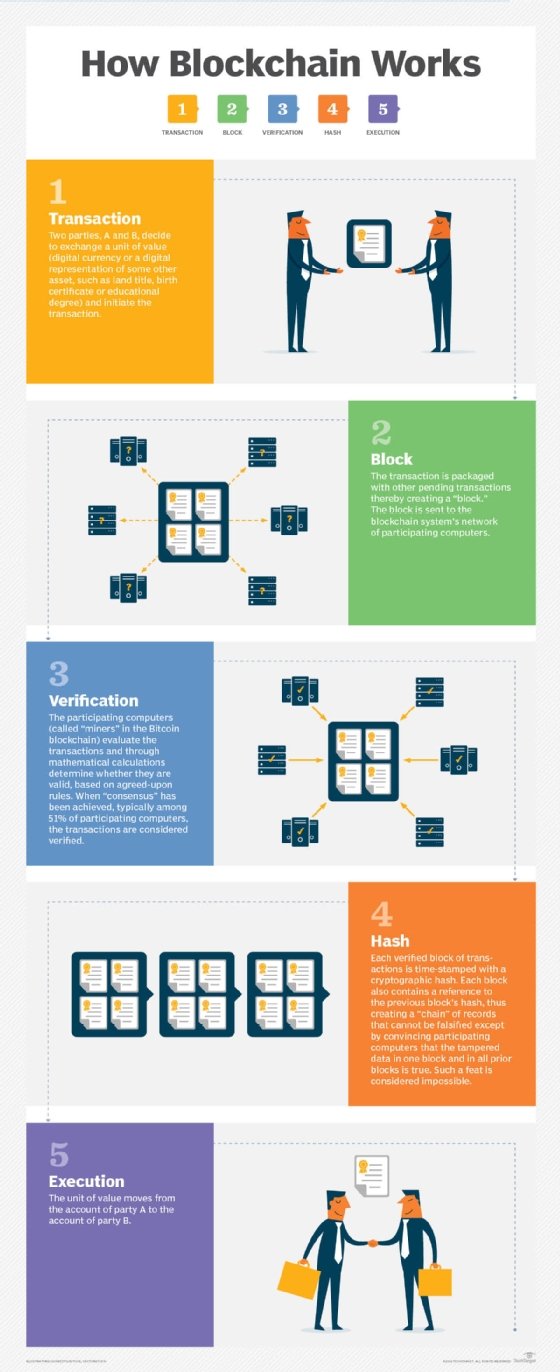
What Is Blockchain And How Does It Work from cdn.ttgtmedia.com A proof of work (pow) based nakamoto consensus blockchain as ethereum classic (etc) is a subjective system of accounts, balances, and smart contracts, anchored on top of an objective physical base that uses large amounts of energy to produce blocks of data, which are subsequently added to a highly secure chain of blocks in the system. What exactly is solana (sol)? Building the blockchain sybil proof accounts are an important building brick of a secure, decentralized blockchain, but they aren't sufficient. Many times, people explain this data as the solution to a puzzle. Proof of stake simple explanation. We also need a method to select the minters in a random fashion which is safe from manipulation and ddos attacks. Besides, each block's hash contains the hash of the previous one; To address the issue of trust, blockchain networks have implemented tests for computers that want to join and add blocks to the chain.
This is impossible to secure pow blockchain without work.
The system has stood the test of time. Bitcoin and other cryptocurrencies are now protecting their blockchain, requiring new entries to include proof of work. Proof of work (pow) is a piece of data that is hard and costly to produce, but easy to verify once it's been generated. How can a blockchain work without mining?. As a consensus algorithm, proof of stake first came onto the blockchain scene in 2011, two years after proof of work. As coronavirus vaccines become more widespread, critical questions arise around providing proof of vaccination. Additionally, how it operates makes it even more secure. Besides, each block's hash contains the hash of the previous one; Blockchain or open source digital ledger technologies could offer a secure solution. Is blockchain without proof of work secure? Komodo's delayed proof of work entails a few steps to protect the smaller blockchains. It's important to understand which consensus mechanism to choose for a specific use case. They're separate concepts, and blockchains can work alone.
Secure ownership of your work. Any blockchain ecosystem must ensure the network is as secure as possible. Proof of work (pow) proof of work is presently the most popular consensus mechanism for blockchains. The proof of work provides high levels of security, safety, and irreversibility that is required in the anonymous public environment. The winner gets to refresh the blockchain for the most recent validated transactions and is credited with a predetermined amount of cryptocurrency by the network.
Proof Of Work Vs Proof Of Stake Shrimpy Academy from assets-global.website-files.com As a consensus algorithm, proof of stake first came onto the blockchain scene in 2011, two years after proof of work. The winner gets to refresh the blockchain for the most recent validated transactions and is credited with a predetermined amount of cryptocurrency by the network. A proof of work (pow) based nakamoto consensus blockchain as ethereum classic (etc) is a subjective system of accounts, balances, and smart contracts, anchored on top of an objective physical base that uses large amounts of energy to produce blocks of data, which are subsequently added to a highly secure chain of blocks in the system. In contrast to public blockchain networks, in private blockchain, the network owner will examine the validators on private blockchain network. Building the blockchain sybil proof accounts are an important building brick of a secure, decentralized blockchain, but they aren't sufficient. Proof of stake simple explanation. Originally developed in 1993, the proof of work consensus mechanism was first popularized when it was used to launch bitcoin. This increases security and prevents any block violation on a proof of work blockchain.
A proof of work (pow) based nakamoto consensus blockchain as ethereum classic (etc) is a subjective system of accounts, balances, and smart contracts, anchored on top of an objective physical base that uses large amounts of energy to produce blocks of data, which are subsequently added to a highly secure chain of blocks in the system.
This pow is carried out by a decentralized. Today, blockchain technology is revered for being secure. Komodo's delayed proof of work entails a few steps to protect the smaller blockchains. In contrast to public blockchain networks, in private blockchain, the network owner will examine the validators on private blockchain network. To address the issue of trust, blockchain networks have implemented tests for computers that want to join and add blocks to the chain. Other systems include proof of stake and proof of burn. This increases security and prevents any block violation on a proof of work blockchain. The 'proof of work' that the name describes is the process by which the blockchain network proves that a miner network node (network nodes that group transactions into blocks and validate them) has done the work needed to create a valid. Blockchains use consensus mechanisms in order to secure the network. Building the blockchain sybil proof accounts are an important building brick of a secure, decentralized blockchain, but they aren't sufficient. Proof of work (pow) is a piece of data that is hard and costly to produce, but easy to verify once it's been generated. The proof of work provides high levels of security, safety, and irreversibility that is required in the anonymous public environment. As a consensus algorithm, proof of stake first came onto the blockchain scene in 2011, two years after proof of work.